
Army and Formations in Warlord: Awaji
Recruit unique names, spend land on promotions, and drag melee, ranged, and cavalry into a line that can actually fight.
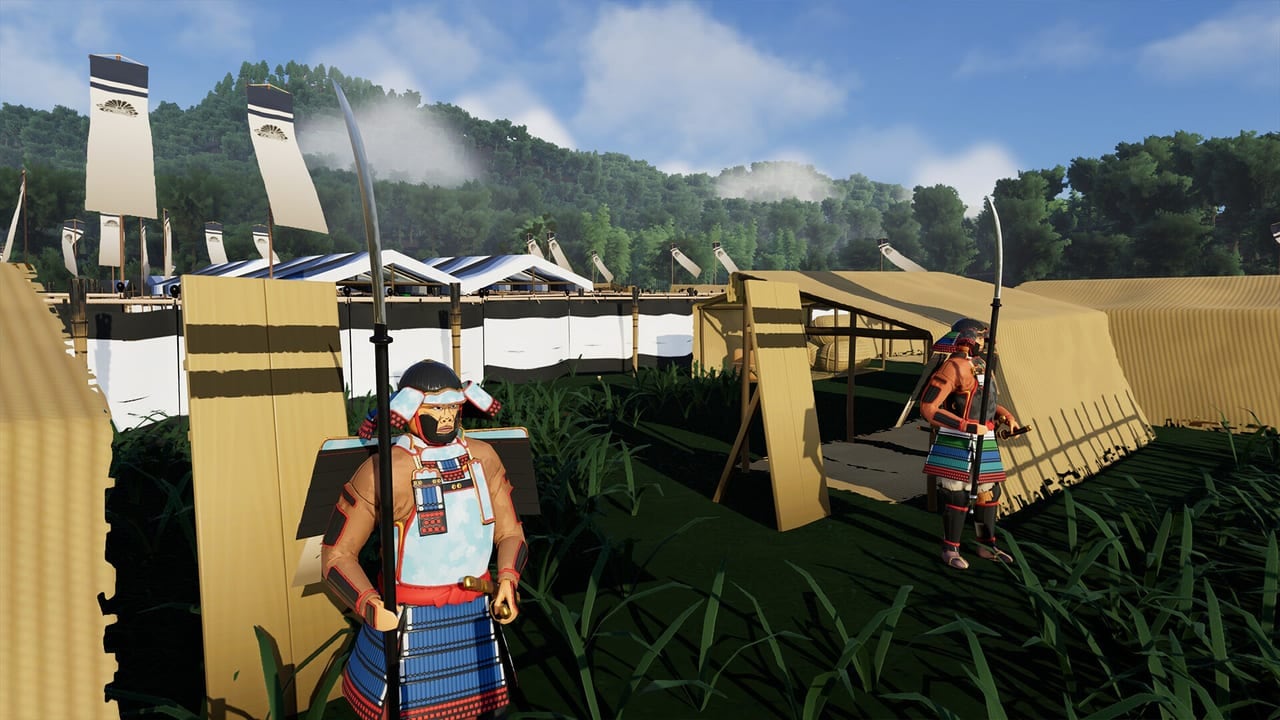
Warlord: Awaji is won by a retinue, not by a lone duelist. You recruit people with unique names, you feed them, you grant conquered land so leaders can be promoted, and you drag groups into a shape that can survive a road. You still fight in first person — the combat page covers the sword — but the campaign fails when the army is a nameless lump behind your hips. Pitch and watch sit on camp. Who should carry spears versus bows is ranked on the unit composition list.
Names, not stacks
Every warrior you pick up is an individual. The game is single-player and built around those names. Treat the roster like a company, not a respawn pool.
Recruit after you can feed and watch. A new name with no tent and no food is a night-raid victim. Land you take can be granted so the army cap grows through promotions. That is the growth loop: capture, grant, promote, fill the new slots with people you intend to keep.
Do not promote everyone the first time a homestead falls. Promote the survivor who actually did heroic work. Experience comes from heroic action — hurting, killing, or finishing a ranked foe — not from standing in the back of a blob. Do not farm your own wounded. Do not pad numbers on roadside civilians if unrest is a conquest problem you still need to manage.
Veterans are the point. A named leader with a polearm is worth more than three fresh blades you cannot identify on the radar. If a veteran is wrapped, peel for them. If a recruit keeps eating spears, put them on camp watch until they stop dying.
Drag-and-drop is the real strategy layer
Open the formation menu and stop leaving everyone in a pile. You get melee, ranged, and cavalry groups. Drag them. Give the melee group a front. Leave a gap behind it for bows when yumi show up. Leave a flank for horses when you have them. Then stand on the hinge, not in the middle.
A blob hides friend-or-foe colors, lets polearms hit everyone at once, and dumps heroic XP on whoever occupies the front pixel — usually you. The rest of the company stays inexperienced and brittle.
Melee group: yari and naginata on the front when you have them, odachi where there is room, tachi only as a stopgap. Ranged group: yumi, five arrow types, and enough space that they are not drawing into your retainers’ spines. Cavalry group: horses when the roster has them; they are a hammer, not a parking circle around your campfire. Mounted detail sits with bow and cavalry.
Until bows and horses exist in your save, do not leave empty fantasy wings. A two-group shape — melee front, you on the right shoulder — beats a decorative three-group diagram you never occupy.
Reorder after every messy fight. Dead men leave holes. New recruits spawn into whatever default the menu still holds. Warrior monks from a shrine are not automatically a better front than a veteran spear line. Place them where reach and aggression help, then watch the first exchange.
Keep the line thin on purpose
Immersive strategy means you are in the file. The AI will fill left and right if you give them a file to fill. If you stand in the center of twenty bodies, they compact around you until nobody can swing.
March on roads with a front, not a tour group. Halt before a homestead or a band, drop the melee group into a line, then step in. You are the extra sword and the emergency thrust, not the entire frontage. After the fight, count names. If the same three veterans are always last standing, your formation is feeding the rest.
Cavalry needs space to miss you. Pull melee tight, leave a lane, and do not chase into your own riders. Ranged needs the opposite of courage: if bowmen are in the front rank, you built a melee group with extra steps. Friend-or-foe still applies while you command. Blue retainers in your look vector will take a cut meant for red.
Land, cap, and when to stop recruiting
Promotions spend conquered land. Grow the cap when you can feed and watch the new bodies, when a formation slot is actually empty, and when a veteran is ready to lead a group.
If food, rest, or night guard is already failing, stop. More names make a worse raid. Pack, move, and fix camp before you celebrate a higher cap.
Unrest and shrine aura change who you meet on the road. A larger army that murders every convoy is not a larger army for long. Conquest decisions decide which bands and monks show up; army decisions decide whether those fights are a line or a riot.
A working first company
Keep the homestead survivors. Name-check them in the roster. Grant land once. Promote one leader, not a committee. Drag a melee front. Stand on the hinge. Replace lost tachi with stolen yari before you chase flavor. Only open a ranged or cavalry group when you have the people and the space.
That company will take the next hill. The 9 September 2026 Steam release is single-player, with Steam Cloud and 57 achievements.
Frequently Asked Questions
Quick answers for new warlords landing on Awaji.
How do promotions work in Warlord: Awaji?
Conquered land is granted so leaders can be promoted and the army cap grows. Do not spend the first grant on everyone. Promote a veteran who already earned XP through heroic action.
Why does my army fight as a blob?
You never used drag-and-drop. Open the formation menu, put melee on a front, and stand on the hinge. A pile hides friend-or-foe colors and feeds polearms. Mixes are on unit composition.
Should I replace wounded veterans with fresh recruits?
No. Unique names with XP are the army. Put a battered veteran on watch or a quieter file. Replace gear, not the person, until they actually fall. Camp watch is covered on camp.
When do I add bows and cavalry?
When you have people, space, and a melee front that can exist without them. Empty decorative wings do nothing. See bow and cavalry once those groups are real in your save.