
Warlord: Awaji Review
An honest launch take on Darkmatter’s solo-led sequel: combat curve, camp and army, Very Positive Steam score, and who should buy.
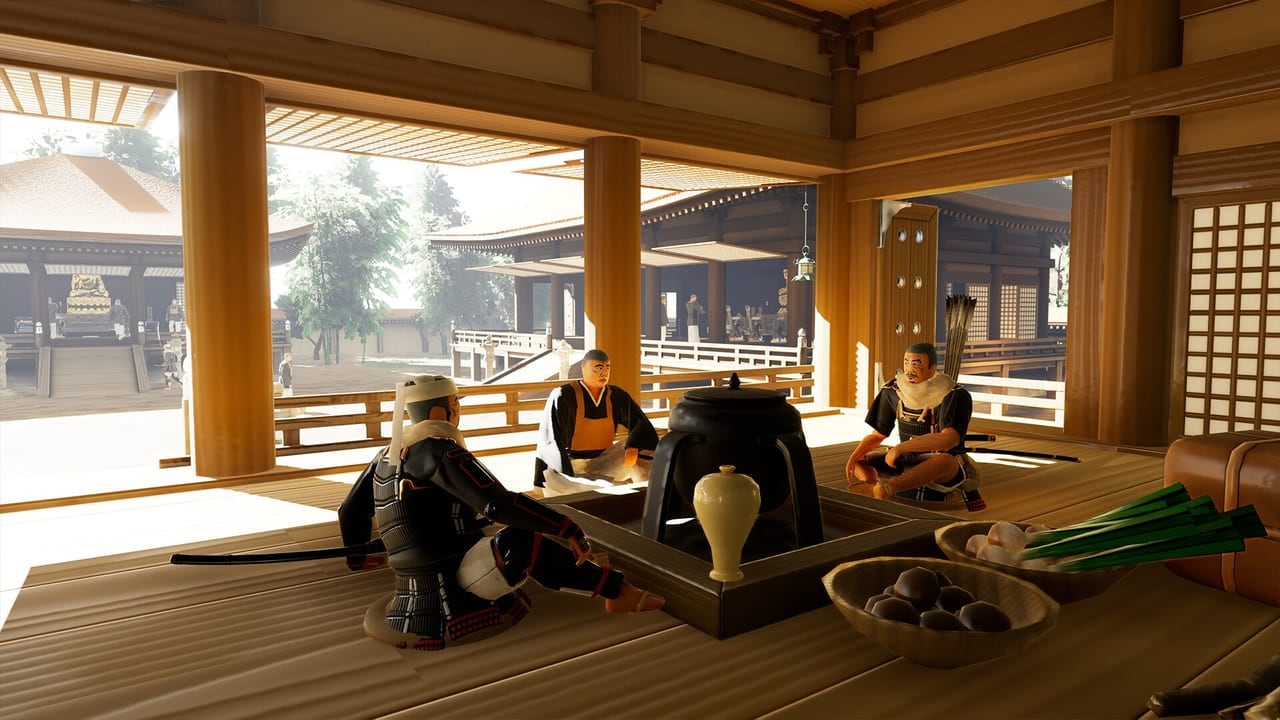
This is not a paid review. Darkmatter Games did not send a code for this page. Warlord: Awaji launched on Steam on 9 September 2026 as a full single-player release, not Early Access, at about $24.99 with a 10 percent introductory discount. At launch it sat at Very Positive, roughly 91 percent of about 60 Steam reviews. That is a small sample. Read it as “people who wanted this genre mostly got it,” not as a guarantee.
The studio is indie and, by the developer’s own public notes, largely solo-led: no publisher, no investors, income tied to Warlord: Britannia sales. You can feel that in the UI and the first-week patches. You can also feel it in the ambition. Awaji is a first-person warlord sim on a heightmap of a real island, with real temples and shrines, named retainers, a camp you pack up, and fights you join yourself. If you wanted a glossy AAA samurai action title, this is the wrong store page.
What it is, and what Britannia already taught
Warlord: Awaji is the sequel to Warlord: Britannia. Same pitch: immersive strategy. You are not an RTS camera. You are a body on the field who also recruits, promotes, and rearranges a retinue. Shrines, spiritual aura, warrior monks, yumi, horses, and period weapons (tachi, not a later katana) are the new language. A getting started hour still helps even if you finished Britannia, because the homestead flow and the island’s density are different.
The look is stylized. Period clothing does not come with team jerseys, which is why the Next Fest demo added optional blue and red character highlights. Turn them on. The radar already paints allies blue and enemies red. That is how you stop cutting your own retainer in a dust cloud. Bindings and highlight toggles sit on controls.
Combat is the hook and the homework
The melee is look-to-hit. You do not scribble a swing. You look at the person you mean to kill. Block is instant even if the animation lags. Block then attack to thrust. Stamina mostly drains on block. Weak spots matter. Polearms outrange a starting tachi. That loop is satisfying once it clicks and punishing until it does. The combat guide exists because launch deaths cluster on the same mistakes.
Controls were the weakest part of the demo. That is an honest sentence, not a pile-on. The learning curve is real: sheath to pick up a ground weapon, read the formation menu, stop panic-slashing in a crowd. The full release does not delete that curve. It adds camp, army, bows, and horses on top of it. The video on this page is a real look at why people cared before launch.
Launch players also asked why head-taking presentation changed. The demo used a kubijikken-style XP display. Next Fest already stripped XP from killing injured or surrendered allies. This review will not invent an official reason. Treat merit as combat, and do not farm allies. If you want a route instead of a verdict, use the walkthrough.
Camp, army, and the actual campaign
The demo was a melee advertisement. The 9 September build is the campaign those systems were for. You pitch tents, feed people, fence a perimeter, set a night watch, and pack the whole thing when the road demands it. That is the camp loop, and it is the difference between a warlord and a tourist with a sword.
You recruit named samurai. You grant conquered land to leaders so the army cap grows. You drag melee, ranged, and cavalry into groups instead of a blob. That is the army loop. Bows have five arrow types. Horses exist in the full game. Neither is a first-homestead toy; both are why the bow and cavalry page is not a trailer caption. Mixes live on unit composition. Steel rankings live on the weapons tier list.
Conquest is not a checklist of made-up cities. Homesteads, forts, shrines, aura, monks, and convoys are the verbs. Burn the wrong thing and the island talks back. Read conquest before you treat every roof as loot.
Who should buy, and who should wait
Buy it if you liked Britannia’s first-person command, if historical weapons interest you more than a katana myth, and if you will save manually. Launch notes already warn that there is no autosave.
Wait if you need a soulslike that explains itself in a subtitle. Wait if you are on Steam Deck — the store lists Unsupported. Wait if your PC is under the system requirements: minimum Windows 10, 9th-gen Intel i5, 16 GB RAM, GTX 2060, 6 GB storage; recommended Windows 11, 11th-gen i7, 32 GB, RTX 3070. Wait if you wanted a 2026 blockbuster camera, not a stylized war camp you pack yourself.
The first patch already moved the tutorial homestead, renamed a farm string, and stopped the pause menu from letting world time crawl. That is a live indie, not a frozen AAA. Check patch notes and the links page for Steam and Discord. Practical pages start at the guides hub. Ranked steel sits on the tier list hub.
If the combat click happens, the island is the game. If it never clicks, no shrine will save the purchase.
Frequently Asked Questions
Quick answers for new warlords landing on Awaji.
Is this a paid or sponsored Warlord: Awaji review?
No. This page is an unpaid launch-week take. Darkmatter did not pay for it, and the wiki does not run a numeric score.
Is Warlord: Awaji Early Access?
No. It is a full Steam release dated 9 September 2026. Single-player only. Introductory price sat near $24.99 with about 10 percent off.
Who should buy Warlord: Awaji at launch?
Players who want first-person command, a movable camp, and period weapons. Skip it if you need Steam Deck support or a hand-holding action game.
How does it compare to Warlord: Britannia?
Same immersive-strategy loop, Japanese island instead of Roman Britain. Shrines, monks, bows, and horses are the new work. Do the homestead even if you finished Britannia.