
Combat in Warlord: Awaji
Look at the target, block on the press, thrust after the block, and stop dying in a blob of your own retainers.
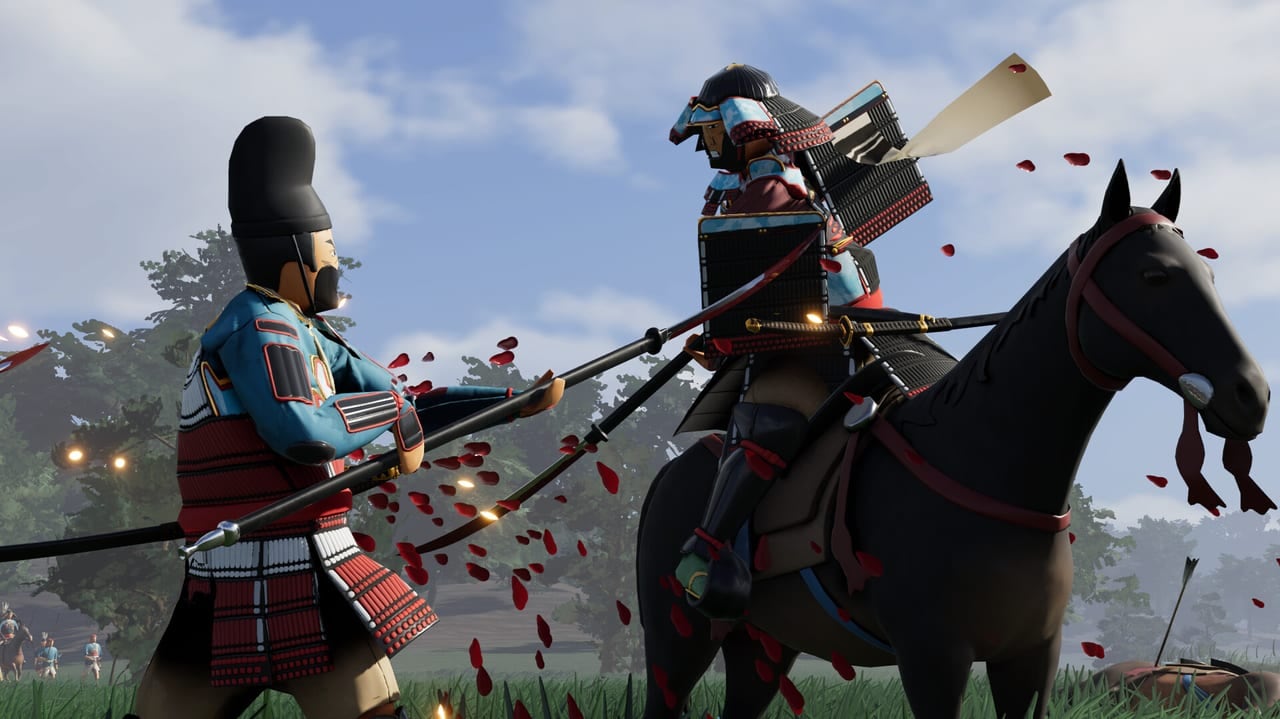
Warlord: Awaji puts you inside the melee instead of above a map. You play a samurai warlord on a heightmap of Awaji Island, fourteenth century, first person, with named retainers who occupy the same camera. Darkmatter Games sells that as immersive strategy. The useful translation is this: if you cannot land a look-and-strike and live, the formation menu will not carry the campaign.
Finish the homestead on the getting started page if you have not. Bind attack, block, sheath, and radar on controls. Use standard first-person move keys; rebind in Settings if the defaults fight your hands.
Look, then strike
There is no mouse-swing tracing. You look at the person you mean to hurt and you issue the attack. The camera is the aim. Staring at a plated chest while a spear comes from the left is how you cut armor and then fall over.
Run a short cycle:
- Center one red marker.
- Strike an unarmored gap — face, throat, inner arm.
- Block the instant they commit. Block registers when you press it, even if the animation lags.
- If they stay in the exchange, block then attack. That chain is a thrust, harder to parry than a wild cut.
- Step so you are not sharing a square with two allies.
Stamina drains mainly on block, not on the swing. That is a trap. Endless slashes still get you killed because you stand in someone else’s arc with an empty tank. Demo builds also broke spears and naginata when you kept thrusting with no stamina. Empty tank plus polearm is how a good weapon snaps. Sheathe, pick up what is on the ground, and stop fencing on fumes.
Thrust after a successful block, against plates, and against anyone who learned your first slash. Cut when a neck is in frame and you have room to miss. Do not thrust-spam into a crowd. The animation still owns you while a second spearman walks around your shoulder.
Blue, red, and the blob
Radar is friend-or-foe: blue allies, red enemies. Optional highlights paint the same colors on bodies because period armor does not include team jerseys. Leave highlights on until sashimono and cloth read at a glance. A blue name on the ground is a unique warrior you will not get back. The army page cannot resurrect a man you cut because he stepped into your look vector.
Standing in a blob is how that happens. Allies occupy your aim. Enemies occupy the same two meters. Polearms love a lump. Fight the shoulder of the engagement. Let the melee group hold a front. You take the flanker, the monk who overextends, and the spear lining up a veteran.
AI retainers fill space you leave them. They also pile into a knot if you pile into a knot. Give them a lane. You may step back, sheathe, and fix the drag-and-drop formation in the middle of a fight. That is command, not cowardice.
Range beats the starting tachi
A tachi is a sidearm you already own. Yari and naginata generally beat it because their look-and-strike finishes before your cut exists. If the homestead left spears in the dirt, take one. Sheathe first; pickup does not happen with the blade out.
Odachi is strong when you have room and a single body in frame. It is a poor panic weapon inside a knot of friends. Tanto is a gap tool. Yumi and five arrow types belong in a ranged group, not in your hand during a scrum. Rankings live on the weapons tier list.
Warrior monks from shrine country use the same rules. Spiritual aura is a conquest layer, not a reason to stare at a visor. Horses change spacing, not the strike law. Until cavalry is in the roster, a tachi sprint is not a plan against a spear wall.
Fight with the army, not through it
Retainers gain experience from heroic action — hurting, killing, or finishing a ranked foe. They do not need you to vacuum every kill. They need you off their blade path. Keep veterans at the edge of vision. If a leader is wrapped, step in with a thrust, not with extra bodies.
A thin melee front with you on the hinge lets AI fill left and right. Glance at the radar between exchanges. If red appears behind the idea of a line, peel. Do not add yourself to the pile. Night raids use this same loop with worse light; a fence does not save you if you stand in the gate. Watch and relocation sit on the camp page.
Chasing a routing man through your own melee is how you eat a naginata from the side you stopped watching. Finish, reset the camera, then decide whether the radar still shows red in front of the line.
Drill on the road after the homestead: throat in frame, one cut, instant block, then a thrust, then a sidestep, then one sheathed pickup per skirmish. When that is boring, grow the retinue instead of feeding it. Full release on 9 September 2026 stacked camp, bows, and horses on this loop. It did not replace the camera.
Frequently Asked Questions
Quick answers for new warlords landing on Awaji.
Why do my attacks miss even when I am standing next to someone?
You look to strike. If the camera is on a breastplate, an ally, or empty air, the cut goes there. Center one red marker and aim at face, throat, or inner arm. There is no mouse-swing tracing.
Does swinging drain all of my stamina?
No. Stamina drains mainly when you block. You still cannot hold block through a spear line, and thrusting a yari or naginata on an empty tank can break the weapon.
Should I replace the starting tachi right away?
Yes if a spear or naginata is on the ground. Sheathe first, then pick it up. Polearms generally beat a starting tachi. Full rankings sit on the weapons tier list.
How do I stop cutting my own retainers?
Turn on blue/red highlights, watch the radar, and fight on the shoulder of the line instead of in the blob. Leave the melee group a lane; you take flankers. Setup is on controls.