
Camp Building in Warlord: Awaji
Pitch a small mobile camp, watch it at night, pack it when the island moves, and do not spend vR101 leftovers on extra tents.
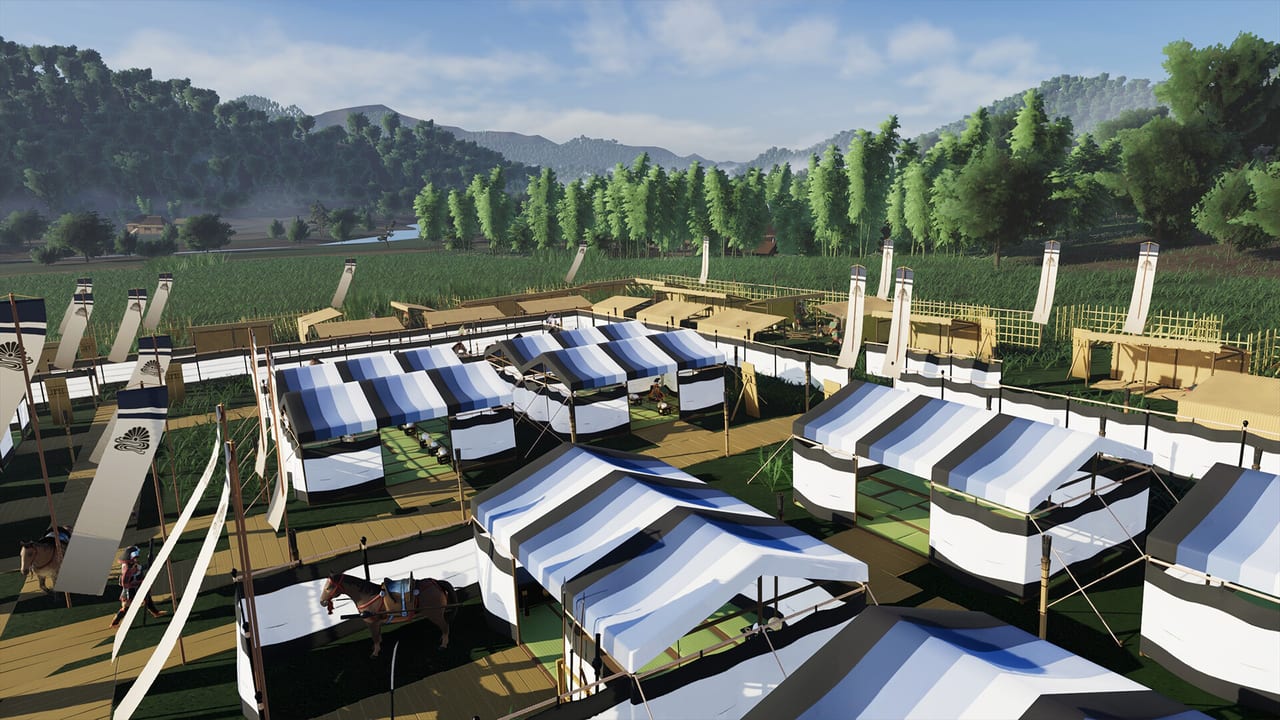
The camp in Warlord: Awaji is a kit you drop on the heightmap and pick up again, not a town you found until the rebel host comes home from the west. Tents, food, rest, fences or screens, and a night watch exist so the named people in your army can sleep without being carved up in the dark. If you are still on the tutorial homestead, finish that flow on getting started first. Patch vR101 gave extra starting resources because players were overbuilding tents before they understood food and watch. The pause menu also stopped world time from crawling, so you can assign guards without the raid clock cheating forward. That extra pile is a temptation, not a building budget.
Pitch anywhere is not pitch everywhere
You can put camp down across Awaji. Good pitches share boring traits: a road or slope you intend to hold, not a shrine courtyard you have not taken, and a pack-up you can finish in one decision. A pretty grove that takes three minutes to leave is a trap.
Build the smallest kit that works:
- Tents so people sleep.
- Food so rest is not a lie.
- A fence or screen so night is not an open field.
- At least one guard assignment.
Then stop. Extra tents you cannot watch are invitations. Extra cookfires you cannot fill are wasted weight when you pack. Spend the vR101 surplus on not starving and on a second watch later, not on a village.
Rest is a campaign resource. Tired retainers fight like tired people. If you chain a dawn skirmish into shrine stairs without pitching, you will learn why the camp exists. Sleep, eat, assign the watch, then move.
Keep the layout readable. If you cannot find the gate at a run, you built a maze. Put screens where a body must choose left or right, and tents behind that choice.
Night is the real test
Raids happen because you are visible and valuable. Night guards decide whether you join a fight at the fence or wake up in the tents. Put a veteran on watch, not the recruit who still confuses blue and red on the radar.
When the raid starts, the melee loop does not change. Look at the man coming through the screen. Block. Thrust. Do not stand in the gate blob. Let the watch hold the chokepoint; you take the walker who goes around. If the camp is already a sprawl, you will not reach the second tent in time. That is the overbuild tax, paid in unique names. The combat page is the same loop with worse light.
Highlights help in the dark. A fence does not block a naginata if you idle in the opening. Sheathe only to grab a dropped spear or to pack.
Packing is a night skill as much as a travel skill. If you cannot break camp quickly, you built a hamlet. Under pressure, keep the screen up while tents go. In daylight, food and tents first, then the fence. Then march. Sitting on one pretty ridge while shrine aura and unrest shift around you is how a safe camp becomes a bad neighborhood.
Do not pack during the first clash of a raid unless the position is already lost. Fighting while half the tents exist scatters the roster. Finish the exchange, count living veterans, then decide.
Camp is logistics for conquest
Homesteads and forts you capture are conquest nodes: land for promotions, spiritual aura at shrines, warrior monks, local reaction. They are not a free hotel that replaces a pitched camp. Your people still need beds they can reach after the banner fight.
Relocate when food around the current pitch is a lie, when raids arrive from a direction you cannot fence, when the next objective on the walkthrough is a ridge away, or when pack-up takes longer than the march. Do not relocate after every skirmish.
Spiritual aura does not feed anyone. A holy ridge with no grain is a pretty grave. Civilian convoys on nearby roads are not decorations; handle that in conquest instead of adding more tents.
Army growth and camp size are the same decision. Promote and recruit only if the watch can cover the new names.
A first-week plan that survives vR101
Day one: smallest kit, one watch, no decorative extra tents even though the patch let you afford them. Confirm pause actually freezes time before you stand in the build list.
After the first real capture: check food and rest before you spend land on promotions. An extra name with no bed is a corpse with potential.
Before a shrine push: pack, move closer, pitch small again. Do not commute from the tutorial homestead while you sightsee across Awaji.
If a raid goes badly: count veterans, rebuild only what the watch can cover, and resist two more tents for morale. Morale is sleep, food, and not dying in a maze you built because the resource counter looked generous.
The 9 September 2026 Steam release is single-player, with Steam Cloud and 57 achievements. Keep a moving company alive on an island that already had temples and roads.
Frequently Asked Questions
Quick answers for new warlords landing on Awaji.
Can I pitch camp anywhere on Awaji?
You can pitch in many places. Choose a spot you can pack quickly, watch at night, and reach after a fight. Do not sit on an untaken shrine courtyard.
Why did patch vR101 add extra starting resources?
Players overbuilt tents before they understood food and watch. The extra resources are a cushion, not a reason to found a village. Notes are on patch notes.
How do I survive night raids on camp?
Assign a veteran guard, keep the camp small enough to reach, and fight at the screen instead of in the tents. Pause should freeze time after vR101 so you can set the watch.
When should I pack up and move the camp?
When food is a lie, raids come from an unfenceable angle, or the next walkthrough objective is a ridge away. Do not pack after every skirmish.